Gear
What to Bring to Your First Tennis Lesson (Beginner Checklist)
Chloe · 22 June 2026 · 10 min read
You have signed up for your first tennis lesson. You are not entirely sure what to pack, whether you need your own racquet, or what shoes are actually right for a tennis court. This first tennis lesson checklist covers exactly that: nothing more.
The short version: your first tennis lesson checklist
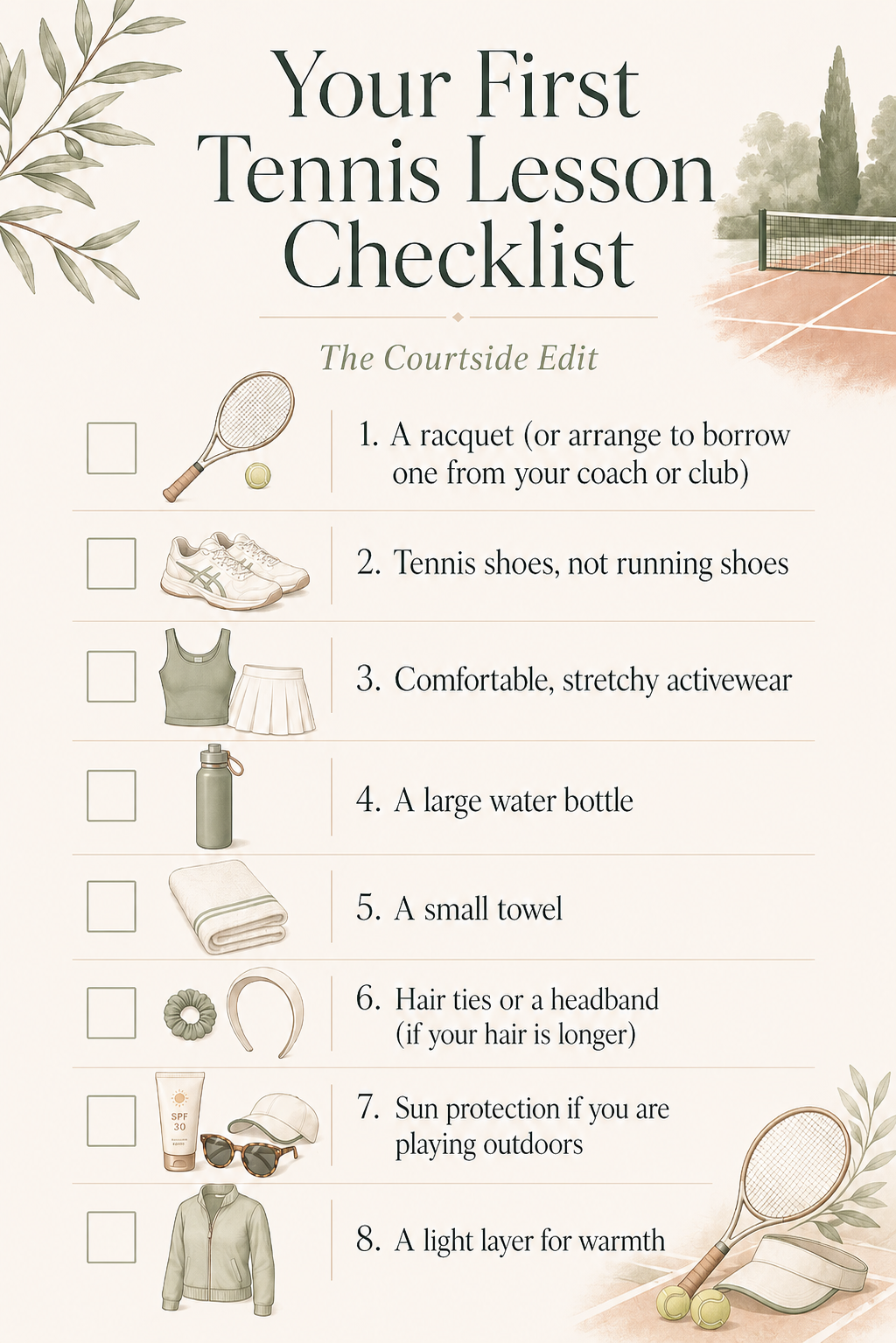
- A racquet (or arrange to borrow one from your coach or club)
- Tennis shoes, not running shoes
- Comfortable, stretchy activewear
- A large water bottle
- A small towel
- Hair ties or a headband (if your hair is longer)
- Sun protection if you are playing outdoors
- A light layer for warmth
That is the whole list. Read on for the detail behind each item.
1. A racquet, or a loaner
You might not need to buy one before your first lesson. Many coaches and clubs lend racquets to beginners, especially for a first session. Ask your coach before you buy. If a loaner is available, use it for that lesson and decide what to buy once you have had a feel for what you like.
If you do need to bring your own, choose a lightweight beginner racquet with a large head (over 100 square inches). A larger head gives you a bigger sweet spot, which makes a real difference when you are still learning where the ball will land. Avoid borrowing an old racquet from a cupboard at home without checking the grip size. A grip that is too small or too large makes everything harder and is one of the most common beginner frustrations.
Related read: How to Choose Your First Tennis Racquet Without Overthinking It
2. Proper tennis shoes
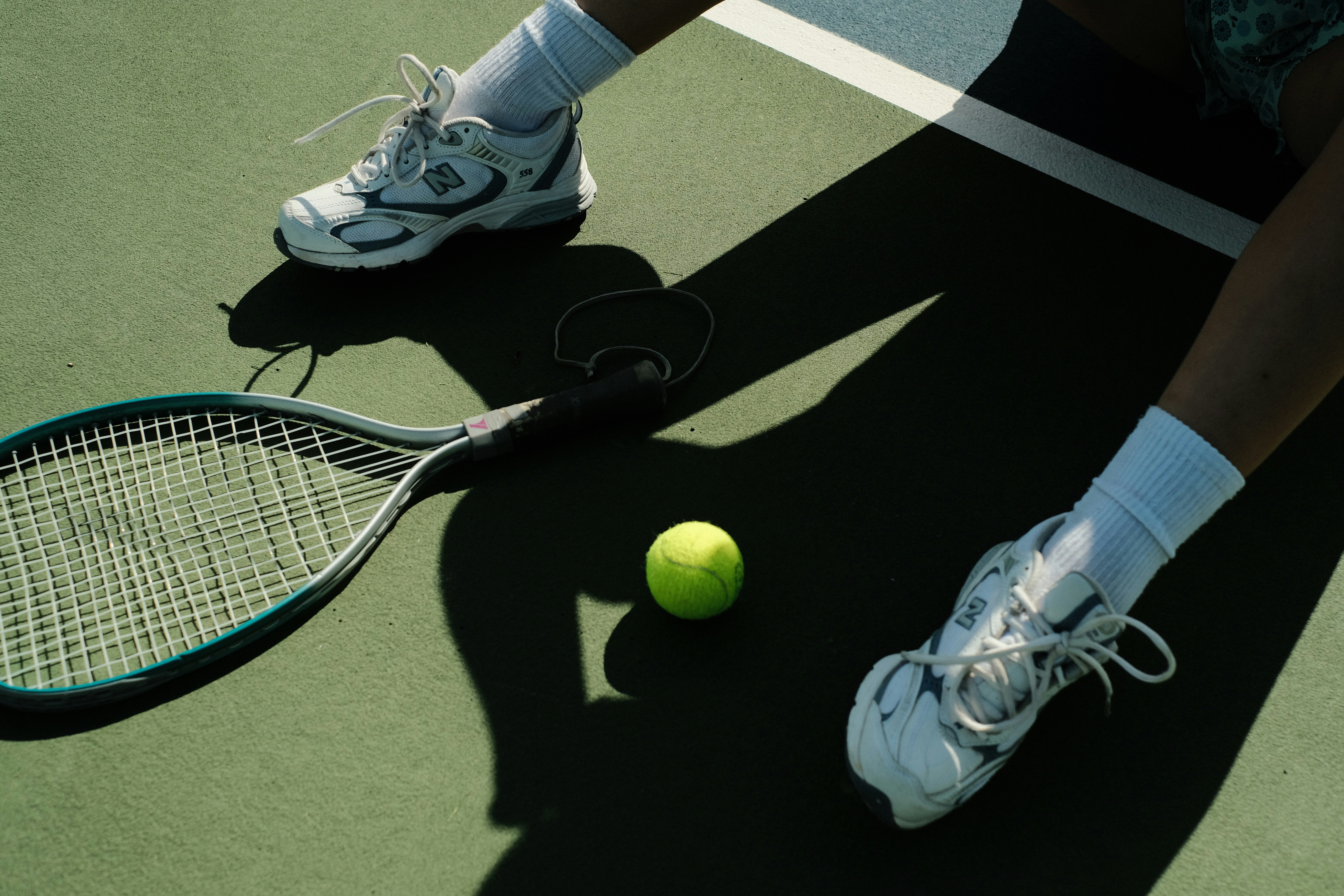
This is the one item on the list worth not skipping. Tennis shoes are designed for side to side movement, which is how you move on a tennis court. Running shoes are built for forward motion and offer no lateral support. On clay or hard courts, a running shoe can slip, skid, or wear unevenly after a single session.
You do not need to spend a lot. Look for court specific shoes from brands like Nike, New Balance, Asics, or Babolat. Avoid chunky trainers, fashion sneakers, or anything with a heel. A first lesson is not the place for shoes that make you think about your feet every five minutes.
Related read: Tennis Shoes vs Regular Trainers: What Beginners Need to Know
3. The right clothes
Tennis does not have a strict dress code for beginners. Comfortable gym clothes work well for a first lesson. Look for:
- A fitted or semi fitted top, not a loose t-shirt that catches on your swing
- Leggings, shorts, or a tennis skirt that allows a full range of movement
- Nothing that you mind sweating in
Many beginners wear standard gym clothes to their first lesson and feel completely at ease. You do not need to look like you play Wimbledon before you have learned to serve.
Related read: What to Wear to Tennis When You're Just Starting Out
4. A water bottle
Non-negotiable. Tennis requires more movement than it looks like from the sidelines, and you will be surprised how quickly you need to hydrate. A 750ml to one litre bottle is ideal. A small 500ml bottle will run out before the lesson ends.
5. A small towel
Easy to forget. A sports towel or even a large flannel works. You will want to wipe your hands before serving, which matters more than you might expect. Grip becomes noticeably slippery when your hands are damp, and you will be serving and returning from the very first lesson.
6. Tennis balls
Your coach will bring them. Do not buy a tube of balls before your first lesson. You almost certainly will not need them, and beginners often choose the wrong type without realising it. After a few sessions, your coach will let you know what to buy if you want to practise between lessons.
7. Sun protection if you are playing outdoors
If you are playing outdoors in daylight, pack the following:
- Sunscreen (apply before you arrive, not on court)
- A visor or cap to keep the sun off your face
- Sunglasses with a close fit or sports wrap (optional, but useful in bright conditions)
Tennis courts are often completely exposed with no shade overhead. An hour of play in direct sun is real UV exposure, even on an overcast summer day. A visor is the minimum. Sunscreen is worth doing properly.
8. A light layer for warmth
Bring a zip up top or a thin jacket, especially for early morning or evening lessons. Courts can be surprisingly cool before your body warms up, and it takes several minutes of rallying before you feel the heat. Layers you can peel off and leave on the bench are better than one heavy layer you cannot remove.
9. Hair ties or a headband
If relevant. The constant head movement in tennis means anything loose will distract you at exactly the wrong moment. A simple elastic or a sports headband is all you need. If you wear glasses, a sports strap to keep them secure is worth adding to the bag.
Related read: What's Actually Inside a Tennis Bag?
What not to bring
- A heavy bag full of equipment you do not yet own. Keep it simple for the first session.
- Fashion trainers, flat pumps, or anything with a heel.
- A tote bag. It slides off the bench constantly and leaves your things exposed on court.
- Baggy clothes that restrict movement or catch on your swing.
- A pile of balls you bought in advance. Wait until you know what you actually need.
Before your first lesson: what to expect
Arrive ten to fifteen minutes early. This gives you time to find the right court (clubs often have several, sometimes numbered), change into your tennis shoes if you arrived in something else, and settle in before your coach appears.
You will probably miss a lot of balls in your first lesson. That is also normal. A first lesson is not an audition and not a fitness test. Your coach has taught absolute beginners before, many times. The goal is to leave knowing what a groundstroke feels like. Everything else can wait.
If you are nervous, it is worth knowing that most coaches find beginners easier to teach than intermediate players with ingrained bad habits. You are starting from the right place.
Not sure where to go next? The Starting Line is a curated reading path for new players, and the Tennis Basics guide covers rules, scoring, strokes, and etiquette in one place.
The polished but practical first lesson bag
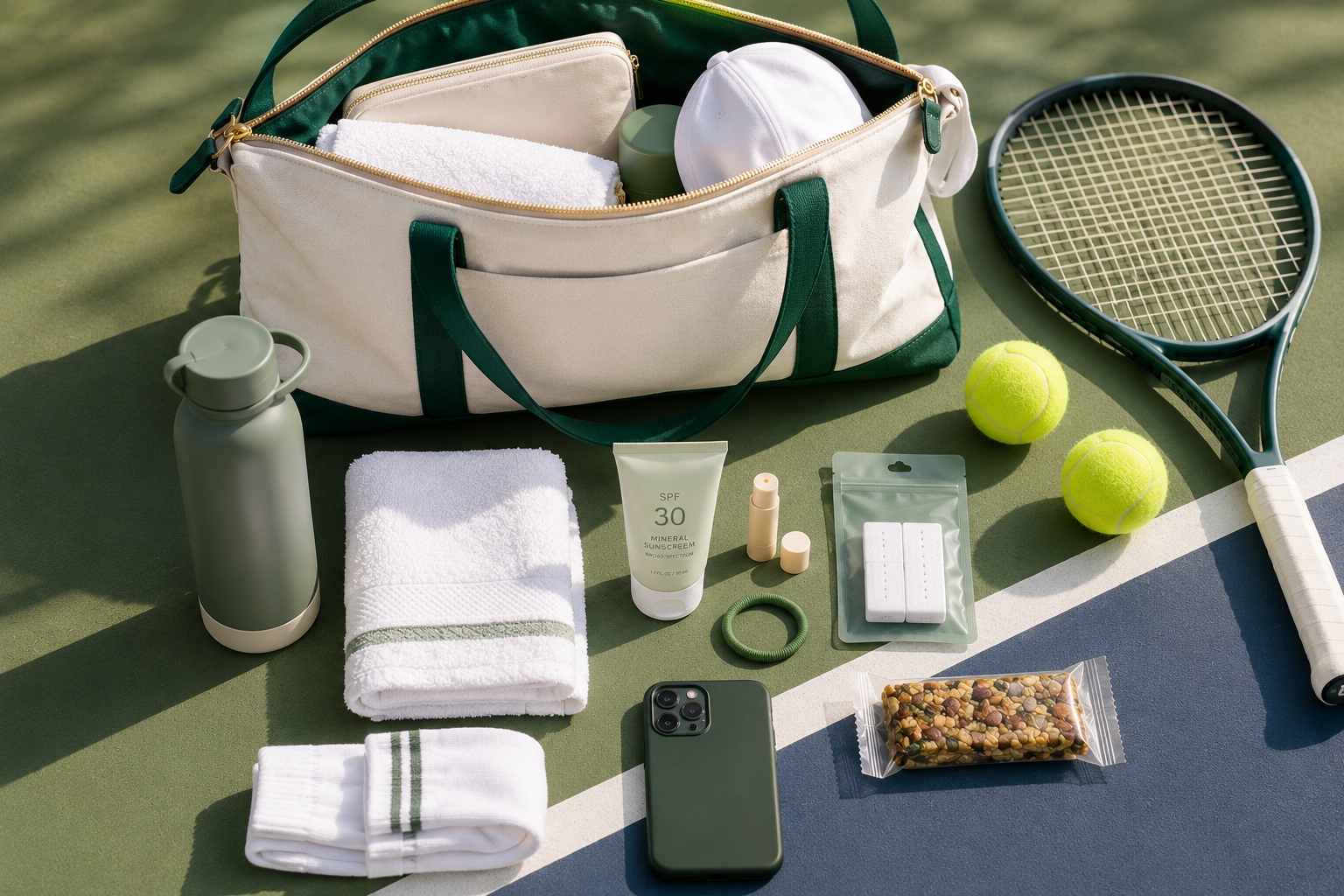
A tote is not quite right for tennis. Everything slides around and it is hard to close securely on a bench courtside. A small sports backpack or a gym bag with a proper zip works better for a first lesson.
You do not need a dedicated tennis bag before you start. A small gym bag is perfectly fine. Later, when tennis becomes part of your weekly routine, a structured tennis bag makes the whole ritual feel considerably better. There are beautiful options at every price point, from minimal canvas to racquet specific cases.