Gear
Tennis Overgrips Explained for Beginners: What They Do and When to Replace Them
Chloe · 29 June 2026 · 9 min read
If you are new to tennis, an overgrip is one of the smallest accessories you can buy, but it can make your racquet feel completely different. A tennis overgrip wraps around the handle of your racquet. It helps with comfort, sweat management, grip security, and keeping the handle feeling fresh.
For beginners, it is one of the easiest and most affordable upgrades because you do not need a new racquet to make your current one feel better. The confusing part is that overgrips come in different types: tacky, dry, thin, cushioned, absorbent, and textured. But you do not need to overthink it at the start.
This guide explains what tennis overgrips do, whether beginners need one, how to choose between tacky and dry, and when to replace them.
Table of Contents
- What Is a Tennis Overgrip?
- Do Beginners Need a Tennis Overgrip?
- Overgrip vs Replacement Grip
- Tacky vs Dry Overgrip
- Which Overgrip Should You Start With?
- How Often Should You Replace Your Overgrip?
- Signs Your Overgrip Needs Replacing
- How Many Overgrips to Keep in Your Bag
- Common Beginner Overgrip Mistakes
- Overgrip Type Comparison
What Is a Tennis Overgrip?
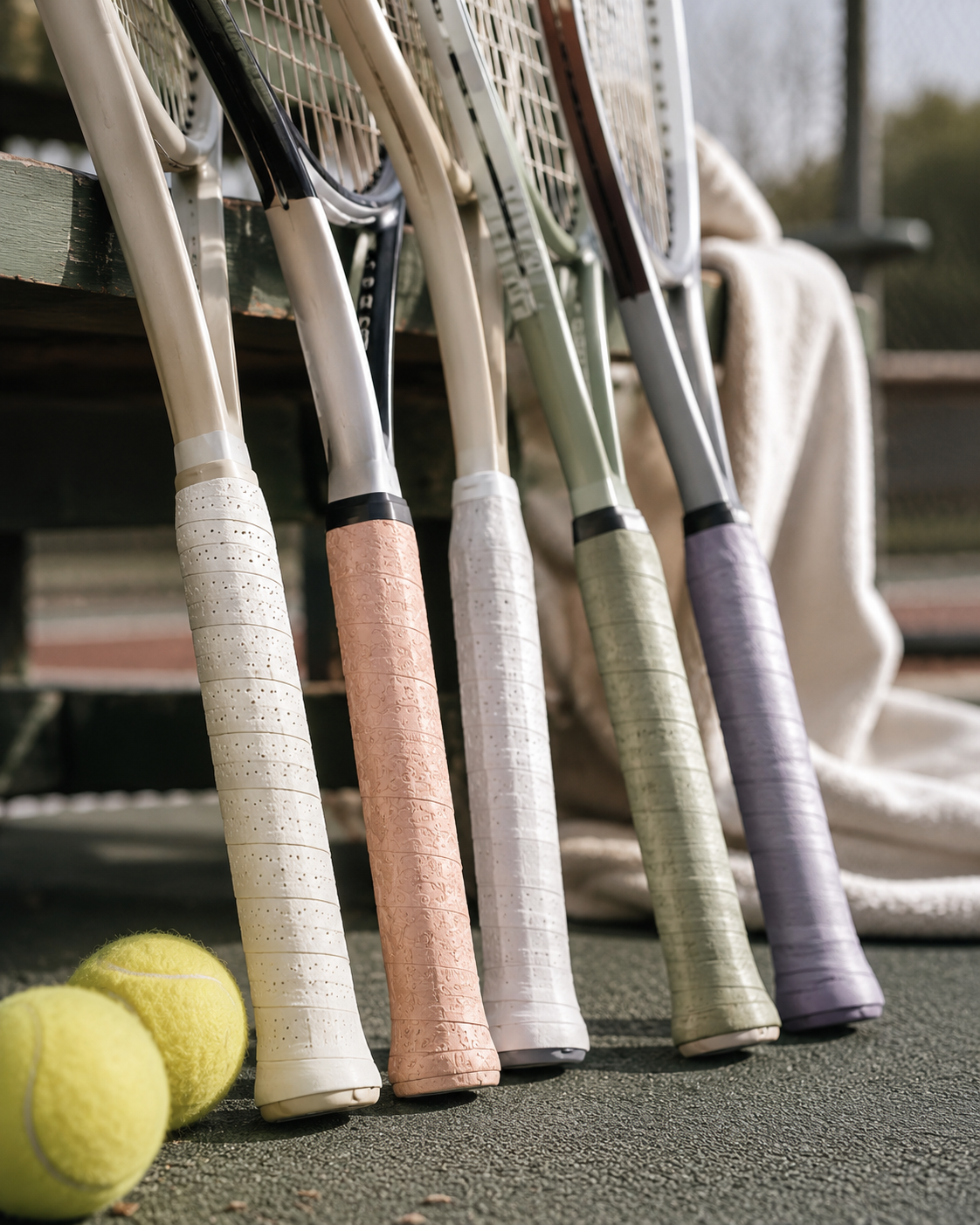
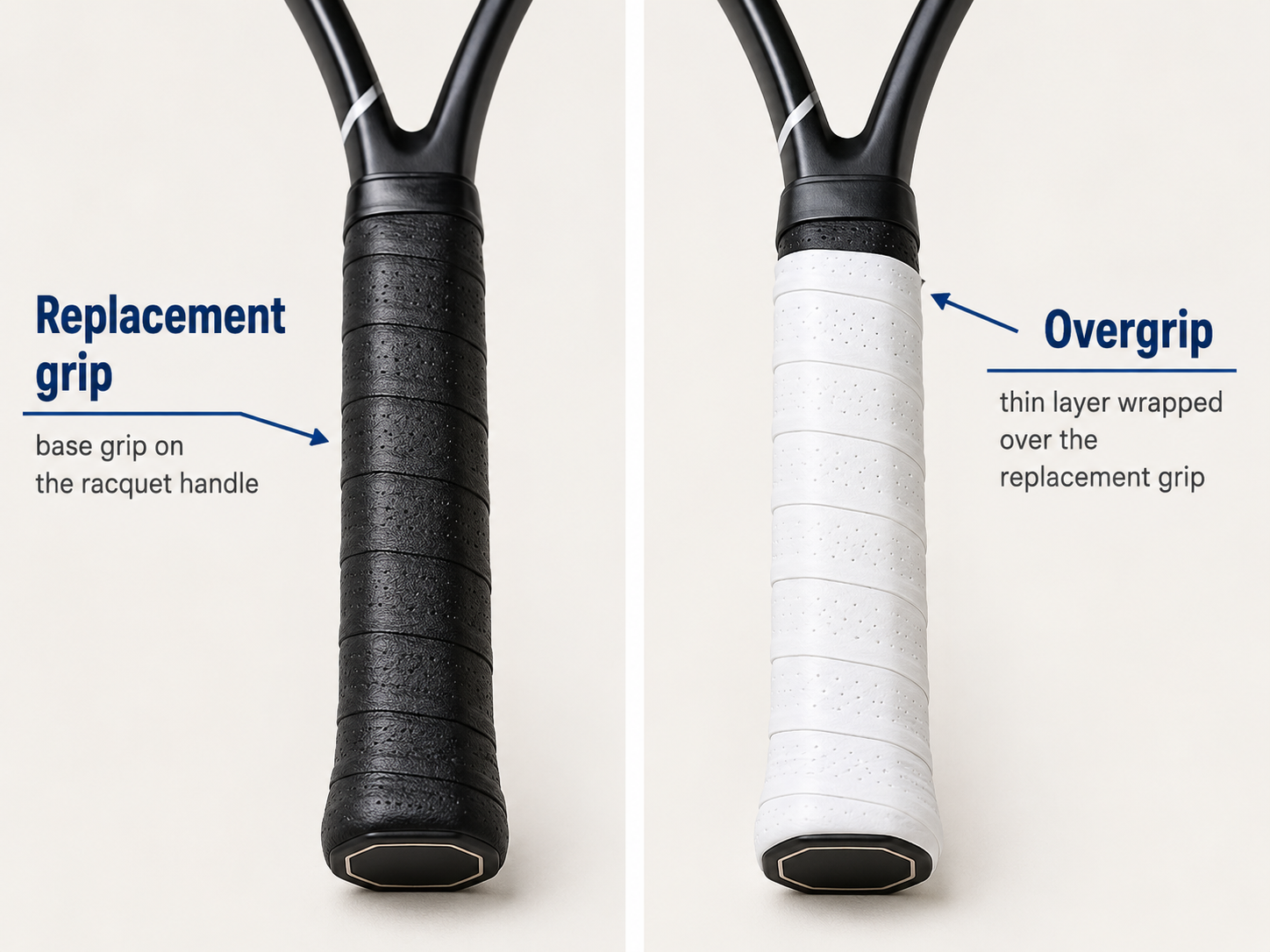
A tennis overgrip is a thin layer of grip material that wraps over the handle of your racquet. It sits on top of the original grip, which is often called the replacement grip or base grip. The overgrip is designed to be replaced regularly, while the base grip usually stays on the racquet for much longer.
An overgrip can help with grip security, sweat absorption, tackiness, comfort, and keeping the handle feeling cleaner and fresher. It also slightly adjusts the handle size and can make an older borrowed racquet feel noticeably better without any other changes.
Do Beginners Need a Tennis Overgrip?
Most beginners should use an overgrip because it makes the racquet easier and more comfortable to hold. You can technically play without one if your racquet already has a fresh base grip. But overgrips are cheaper and much easier to replace than the original grip, so they are the practical first choice.
A tennis overgrip is especially useful if your hands sweat during lessons, your racquet feels slippery, the handle looks dirty or worn, you are using a borrowed racquet, or you simply want a fresher and more secure grip surface. For beginners, a fresh overgrip can make the racquet feel more stable, which helps you focus on learning instead of constantly readjusting your hand.
Overgrip vs Replacement Grip
This is one of the most common beginner tennis gear questions. A replacement grip is the thicker grip already installed on the racquet handle. It forms the main cushion between your hand and the racquet. An overgrip is the thinner layer wrapped over the replacement grip. It is easier to change and is designed to wear out faster.
Think of it like this: the replacement grip is the base layer, and the overgrip is the replaceable top layer. Most beginners do not need to replace the base grip immediately. Start with an overgrip first. It is cheaper, easier to apply, and usually solves the problem on its own.
Tacky vs Dry Overgrip
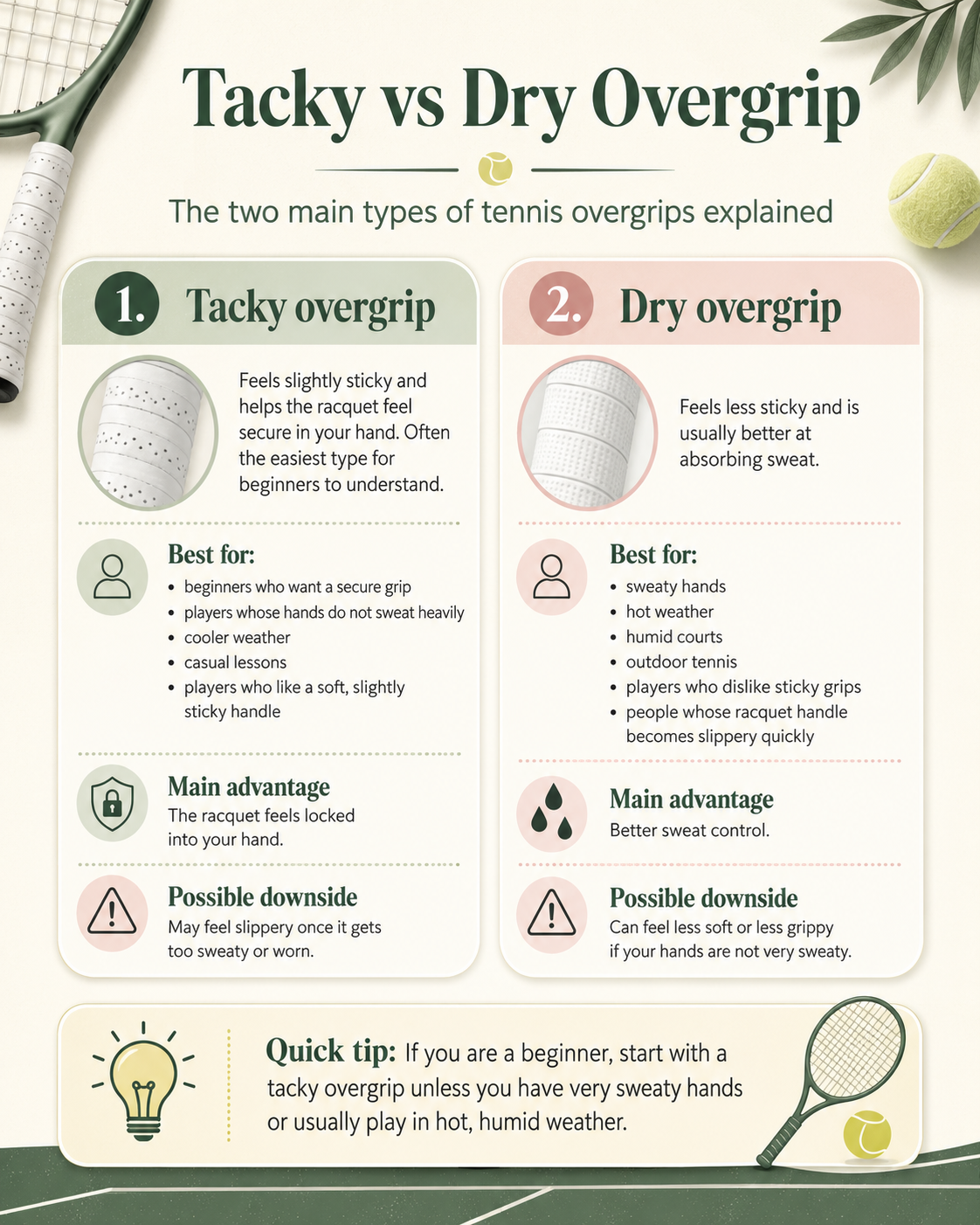
The two main types of tennis overgrips are tacky overgrips and dry overgrips. Understanding the difference makes choosing much simpler.
Tacky overgrip
A tacky overgrip feels slightly sticky. It helps the racquet feel secure in your hand and is the easiest type for beginners to understand. Tacky overgrips are best for players whose hands do not sweat heavily, cooler weather, casual lessons, and anyone who wants a soft and slightly sticky handle. The main advantage is that the racquet feels locked into your hand. The downside is that tacky overgrips can feel slippery once they get very sweaty or worn down.
Dry overgrip
A dry overgrip feels less sticky and is better at absorbing sweat. Dry overgrips are best for sweaty hands, hot or humid weather, outdoor courts, and players whose racquet handle becomes slippery quickly. The main advantage is sweat control. The downside is that some dry overgrips can feel less soft or less grippy if your hands are not particularly sweaty.
Which Overgrip Should You Start With?
Most beginners should start with a tacky overgrip. It gives a secure and comfortable feel and is easy to use from your very first lesson. You will know quickly whether you like the slightly sticky feel or whether you need to switch to something more absorbent.
Use this quick guide to find the right starting point for you.
01 — Do your hands sweat during play?
Do not buy a large pack immediately. Start with a small pack of two or three, test the feel over a few sessions, and then buy more once you know what you like.
How Often Should You Replace Your Overgrip?
There is no perfect rule because it depends on how often you play, how much your hands sweat, and how quickly the grip wears down. For beginners, the simplest guide is: change your overgrip when it no longer feels good to hold.
If you play once a week, one overgrip may last a few weeks. If you play several times a week or sweat a lot, you may need to change it after every two or three sessions. The point of an overgrip is that it is replaceable. It is supposed to wear out. Replacing it is not a sign that anything is wrong.
Signs Your Overgrip Needs Replacing
Your overgrip probably needs replacing if the colour looks very dirty, the texture feels smooth rather than textured, the handle feels slippery, the edges are fraying, the grip starts peeling, the finishing tape is coming loose, your hand slips during swings, or the grip smells stale. A worn overgrip does not mean your racquet is damaged. The outer layer has simply done its job.
How Many Overgrips to Keep in Your Bag
For beginners, one or two spare overgrips in your tennis bag is enough. You do not need to carry a full pack unless you play very frequently.
A simple beginner setup: one overgrip on your racquet, one spare in your bag, and a small piece of finishing tape. Keep these inside a small zip pouch with your other accessories such as a dampener, lip balm, and hair ties. This keeps your bag practical without making it feel cluttered. For more on building a complete kit, the best tennis accessories for beginners guide covers everything worth having in your bag.
Common Beginner Overgrip Mistakes
Using the same overgrip for too long
If your grip feels dirty, slippery, or worn, replace it. A fresh overgrip can make the racquet feel significantly more secure in just a few minutes.
Buying a large pack too soon
Do not buy a large multipack before you know whether you prefer tacky, dry, thin, or cushioned overgrips. Start small and test first.
Wrapping it too loosely
An overgrip should be wrapped smoothly and under slight tension. If it is too loose, it will bunch or unravel during play. Most overgrips come with instructions and finishing tape to secure the end.
Ignoring sweat
If your hands sweat noticeably, a dry or absorbent overgrip will serve you better than a tacky one. Do not keep using a grip that feels slippery just because you bought it in a colour you like.
Choosing only by colour
A white overgrip looks clean and classic, but comfort and performance come first. Choose based on feel and then narrow down by colour once you know the type you want.
Forgetting that overgrips change handle size
An overgrip adds a small amount of thickness to the handle. If your racquet already feels slightly too large to hold comfortably, choose a thinner overgrip. If you are unsure about your racquet grip size in general, the beginner racquet guide covers this in detail.
Overgrip Type Comparison
Select any overgrip type below to see when it works best, its advantages, and what to watch out for as a beginner.
For more on building your first tennis kit around accessories like overgrips, the best beginner tennis accessories guide covers everything from dampeners and pouches to water bottles and visors.